
10 Marketing Mistakes Independent Musicians Make
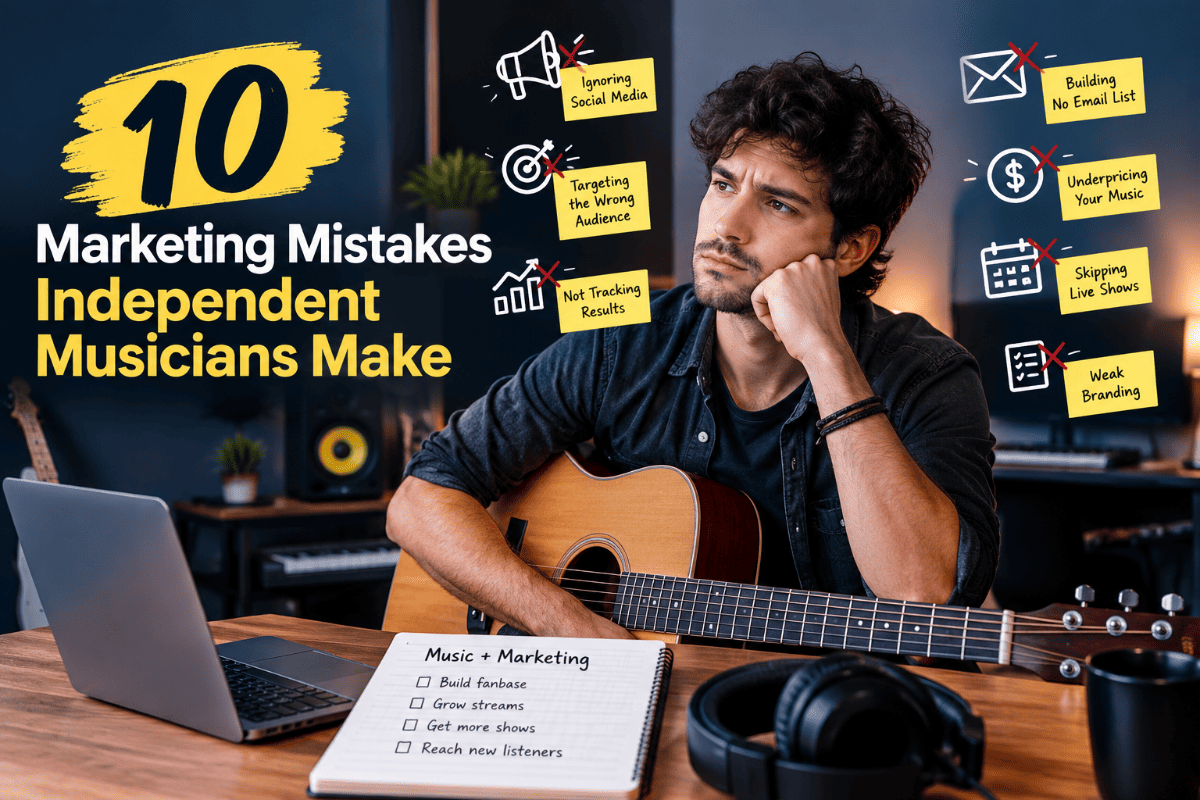
10 Common Music Marketing Mistakes Independent Artists Should Avoid
Great music deserves to be heard, but making good music is only half the journey. Many talented artists struggle to reach listeners because of simple marketing mistakes. From posting without a plan to ignoring their audience, these problems can slow growth and waste valuable time.
The good news is that most of these music marketing mistakes are easy to fix. With a clear identity, useful content, and a smart approach, independent musicians can build attention, grow loyal fans, and give every new release a better chance to succeed.
1. Promoting Music Without a Clear Plan
Posting a song link once and hoping people discover it is not a marketing plan. One of the biggest mistakes artists make is promoting music without knowing what they want to achieve.
Before releasing a song, decide on your goal. You may want more streams, new followers, email subscribers, concert visitors, or simply more people to know your music. A simple plan gives every post a purpose. It also helps you decide which platforms to use and what type of content to create.
A good music marketing strategy can include pre-release posts, behind-the-scenes videos, short clips, release-day content, fan conversations, and follow-up posts after the song is released.
2. Trying to Reach Everyone
Your music may be available to everyone, but your marketing should not try to speak to everyone.
An independent artist needs to understand who is most likely to enjoy their music. Think about the type of music they listen to, the artists they follow, the content they watch, and the platforms they use.
For example, an electronic artist may connect with fans through short performance videos and production content. A singer-songwriter may get better results from storytelling, acoustic performances, and personal posts.
Knowing your audience helps you create content that feels relevant instead of random.
3. Having an Unclear Artist Identity
People should be able to understand who you are as an artist.
One of the common music branding mistakes is changing your style, visuals, message, and personality with every release. Your music can grow and change, but your audience should still recognize you.
Your artist identity can include your sound, visual style, story, photos, colors, artwork, tone of voice, and the subjects you often explore. You do not need an expensive brand design. You need consistency.
When your social media profiles, music artwork, website, and promotional content feel connected, people are more likely to remember you.
Read More :- Music Production Trends: What Independent Artists Need to Know
4. Posting Only When a Song Is Released
Many artists disappear between releases. They spend weeks promoting a new song and then stop posting as soon as the release is over. This makes it difficult to build a long-term relationship with listeners.
Music marketing should continue even when you do not have a new song. You can share an old performance, explain how you wrote a song, show a studio moment, post a short live clip, answer fan questions, or share something about your creative process.
Regular content keeps your name familiar and gives people more reasons to follow you.
5. Focusing Only on Streams and Follower Numbers
Numbers can be useful, but they are not the whole story. An artist with fewer followers can have a stronger fan base than someone with thousands of inactive followers. Instead of looking only at follower counts, pay attention to comments, shares, saves, repeat listeners, direct messages, and other signs of genuine interest.
A smaller group of loyal fans can support your career for a long time. This is one of the most important music marketing mistakes to avoid. Do not chase numbers so much that you forget the real people behind them.
6. Using Every Social Media Platform
Being everywhere is not always a good idea. Trying to manage five or six platforms can leave you with little time to make music. Instead, choose the platforms where your audience is most active.
Learn what works on each platform. A short video may work well on one platform, while a longer story or live performance may work better somewhere else. The best marketing tips for independent musicians often come down to consistency. It is better to create useful content regularly on two platforms than to post rarely on six.
7. Making Every Post a Sales Pitch
Nobody wants to see the same message repeated every day: "Listen to my new song."
Promotion is important, but your content should offer something to the audience too.
Share your story. Show how a song was created. Talk about the meaning behind a lyric. Post a rehearsal clip. Ask your followers a question. Share a funny moment from the studio.
When people enjoy your content, they become more interested in your music. Think of marketing as a conversation rather than an advertisement. Your goal is to build a relationship with listeners, not simply send them a link.
8. Ignoring the Quality of the Music
Marketing can bring people to your song, but the music needs to give them a reason to stay. Poor recording quality, weak arrangements, or an unfinished mix can make a listener leave quickly. This is especially important for an independent music producer artist who handles much of the creative and technical work alone.
Before promoting a release heavily, listen carefully to the final track. Check the vocals, instruments, balance, arrangement, and overall sound. If needed, work with a producer or mixing and mastering professional. A strong marketing campaign works best when it leads listeners to a strong final product.
9. Spending Money Without Tracking Results
You do not need a huge marketing budget to promote your music. However, if you spend money on advertising, playlists, content, or other promotional activities, you should know what you are getting in return.
Start with a small budget and test one idea at a time. Watch which content gets clicks, views, saves, shares, or new listeners. Then put more effort into the methods that produce useful results.
This is a smarter approach to marketing for independent music artists because it helps you avoid spending money based only on guesses.
10. Giving Up Too Soon
Music marketing takes time. One post may get very little attention while another suddenly reaches thousands of people. That does not mean you should stop after one unsuccessful campaign.
Review your results and learn from them. Maybe your video needed a stronger opening. Maybe the caption was unclear. Maybe you posted when your audience was inactive. Maybe the song needed more build-up before release.
Treat each campaign as a learning experience. Over time, you will understand what works for your music and audience.
Build a Marketing System That Supports Your Music
Avoiding music marketing mistakes is easier when you create a simple system. Plan your release dates, prepare content early, understand your audience, keep your branding consistent, and track your results.
Most importantly, do not let marketing take over your creative life. Your job is still to make great music.
If your songs need stronger production before you begin promotion, professional support can also make a difference. Custom music production for artists can help develop a track around your sound, goals, and creative direction.
The best marketing strategy is not about being everywhere or spending the most money. It is about reaching the right people with the right message and giving them a reason to care.
Take Your Music From Creation to Release
Strong music and smart marketing work together. Once you understand your audience, build a recognizable identity, create useful content, and learn from your results, you can promote your work with greater confidence.
At Richard Schulte, we understand that independent artists need music that reflects their own creative vision.
We work with artists through songwriting, custom production, independent music production, and mixing and mastering, helping develop polished tracks that are ready to share with listeners.
Frequently Asked Questions
-
Common mistakes include promoting without a plan, ignoring the target audience, using inconsistent branding, posting only during releases, focusing too much on follower numbers, and giving up too quickly.
-
A clear artist identity helps people remember you. Consistent visuals, sound, messaging, and personality can make your music easier to recognize across different platforms.
-
Artists can use organic social media content, live performances, behind-the-scenes videos, collaborations, email lists, short-form videos, and direct fan engagement. Consistency is often more valuable than a large budget.
-
Knowing your audience helps you create better content and choose the right platforms. It also makes your promotional messages more relevant to the people most likely to enjoy your music.
-
There is no single perfect schedule. Start promoting before release, increase activity around release day, and continue sharing the song afterward. Avoid posting the same message repeatedly and instead create different content around the track.
