How to Record Music: Step-y-Step Guide
Music is something that brings joy, fun, and feelings that words alone cannot explain. Today, learning how to record music is easier than ever, even for kids and beginners who are just starting their journey.
You do not need a big studio or expensive tools to begin. You only need simple equipment, patience, and a clear way to follow each step. In this guide, you will learn everything in a very simple way so you can understand how songs are made from start to finish.
Step-By-Step Guide To Record Music
1. Understanding the Basics of Music Recording
Before we start recording, it is important to understand what music recording means. It is the process of saving sounds like singing, instruments, or beats into a computer so you can listen to them again and improve them.
A professional music composer is someone who creates music in a planned and careful way. They do not just sing or play randomly. They follow steps to make the music sound nice and clean. You can also learn this by practicing slowly and carefully.
Music recording is not only about singing. It is also about listening, fixing small mistakes, and making everything sound better.
2. Step-by-Step Music Recording Process
Step 1: Make a Simple Plan
When you start How to record a song at home, first think about your song. What will you sing? What music will you use? Planning helps you stay organized and makes recording easier.
Step 2: Choose a Quiet Place
Pick a room where there is not too much noise. This helps your voice sound clear when you record.
Step 3: Start Recording Your Music
Follow a simple step-by-step music recording method. First record the music, then record your voice, and then check if everything sounds good.
Step 4: Listen and Fix Mistakes
After recording, listen carefully. If something sounds wrong, you can record it again. This helps you improve your song.
Step 5: Save Your Work
Always save your recordings so you do not lose your music.
3. Home Recording Studio Setup Essentials
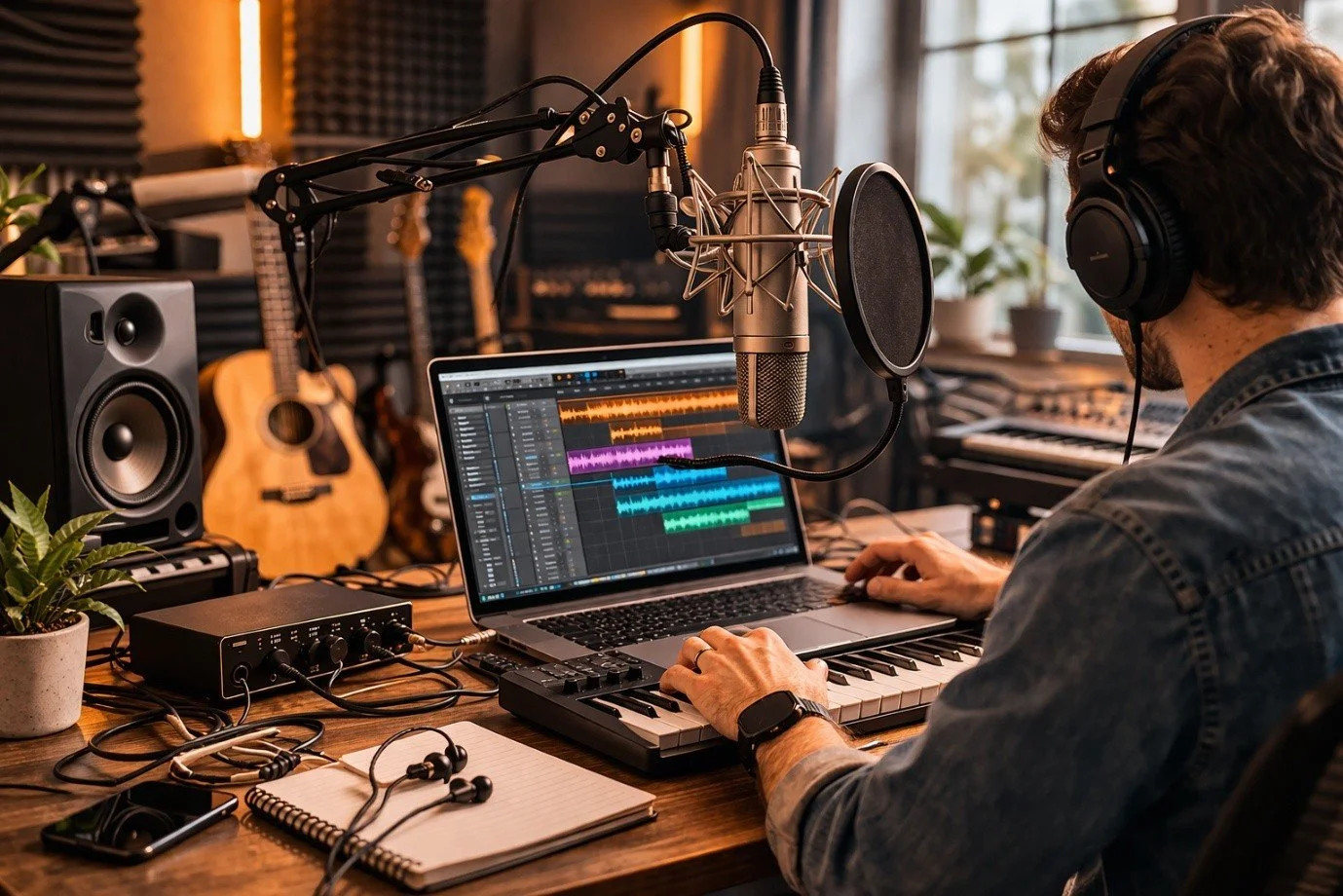
To start recording at home, you need a small setup. This is called a home studio music production setup.
You will need a few simple things:
A microphone to record your voice
A computer or laptop
Headphones to listen clearly
Recording software on your computer
Even if you do not have expensive tools, you can still make good music. The most important thing is practice and learning step by step.
4. How to Record a Song at Home Like a Beginner
Learning How to record a song at home is easy when you follow simple steps.
First, sit in a quiet room. Then open your recording software. Next, press record and start singing or playing music.
Do not worry if you make mistakes. Even beginners make mistakes. You can record again and again until it sounds right. This is how people learn and improve over time.
Keep your voice calm and clear. Try not to rush. Slow and steady recording always sounds better.
5. AI Music Recording Tools for Beginners
Today, there are smart tools called AI music recording tools that help people make music more easily. These tools can help you clean your voice, fix small mistakes, and even suggest better sounds. They act like a helper while you are making music.
Even if you are new, these tools can make your music sound better and help you learn faster. But remember, your ideas and creativity are still the most important part.
6. Learning Like a Professional Music Composer
A professional music composer does not rush. They listen carefully to every sound. They also practice a lot before finishing a song. You can also think like a music composer by doing the same things. Listen to your recordings again and again. Try to understand what sounds good and what needs improvement.
This helps you become better over time. Music is a skill that grows with practice and patience.
7. Home Studio Music Production Made Simple
With home studio music production, you can create music right from your room. You do not need a big building or a large studio.Start small. Use your computer, microphone, and headphones. Then slowly learn how to mix sounds and record better music.
You can also try different styles of music. This makes learning fun and interesting. Many famous musicians started in small rooms just like this.
8. Mixing and Mastering Tools Explained
After recording your music, the next step is making it sound smooth and clear. This is where mixing and mastering tools help. Mixing means balancing all sounds like voice and instruments so nothing is too loud or too soft.
Mastering means making the final song sound clean and ready to share with others.
These tools help your music sound more professional and polished, even if you are just starting.
9. Setting Up Your Home Recording Space
A good home recording studio setup is very important for clear sound. You should choose a quiet room where outside noise is low. You can also add soft items like pillows or curtains to reduce echo.
Keep your microphone in a steady place so your voice does not change too much. A simple setup can give you very good results if used properly.
10. Practice and Improvement
Music improves with practice, especially if you aim to become a professional music composer. Do not worry if your first recording is not perfect. Every try helps you get better.
Listen to your songs, learn from them, and try again. Slowly, your skills will grow. Even experts started as beginners once. Keep learning, keep recording, and keep improving.
Connect With Us!!
Learning how to record music is no longer limited to professionals. With modern tools, AI support, and accessible software, anyone can start producing high-quality songs from home. Whether you're just exploring or building a career, the key is consistency, creativity, and continuous learning.
At Richard Schulte, we help artists and creators transform their ideas into fully produced music through expert guidance and modern production techniques. We believe every sound has a story and we’re here to help you bring it to life.
Frequently Asked Questions
-
Start by setting up a quiet space, using basic recording equipment, recording instrumentals and vocals, then editing, mixing, and mastering your track.
-
You need a microphone, audio interface, headphones, DAW software, and a quiet recording space.
-
Begin by writing your song, recording simple instrumentals, capturing vocals, and using basic editing tools to refine your track.
-
Essential equipment includes a microphone, audio interface, computer, DAW software, headphones, and optional acoustic treatment.
-
Use a good microphone, reduce background noise, record in a treated space, and properly set gain levels.
-
Use a pop filter, maintain proper mic distance, record in a quiet room, and apply light compression during mixing.
-
Using a DAW with built-in templates and basic recording gear is the easiest way to start.
-
Choose a quiet room, install recording software, connect your microphone and interface, and optimize acoustics.
-
Start with free software, affordable microphones, and gradually upgrade your equipment as you grow.
-
Yes, with today’s technology and AI music recording tools, you can record professional-quality music at home.