Music Production Workflow for Beginners: A Step-by-Step System
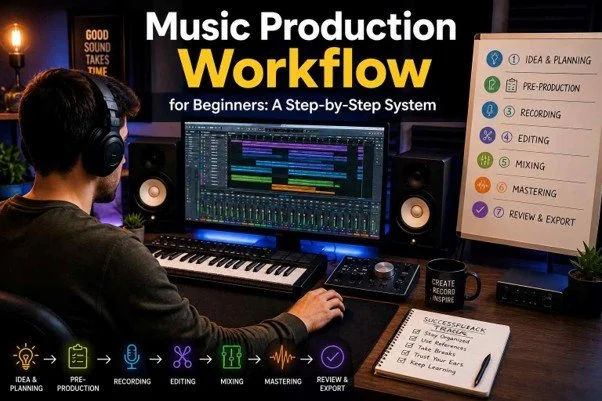
Every great song starts with one small idea. Learning how to start music production as a beginner can feel hard when you see all the tools, sounds, and buttons in music software. The good news is that you do not need to learn everything at once.
A simple workflow can help you know what to do next. In this guide, you will learn how to take a song from an early idea to a finished track by following clear steps that are easy to understand and practice.
What Is a Music Production Workflow?
A Music Production Workflow for Beginners is a simple plan for making a song. It shows you what steps to follow from the first idea to the final song.
A basic step-by-step music production process often looks like this:
Create a song idea
Plan the song
Record sounds and instruments
Edit and arrange the tracks
Mix the song
Prepare the song for mastering
Export and share the final track
You do not always have to follow these steps in the same order. Sometimes, you may go back and make changes. That is normal. The workflow simply gives you a clear path to follow.
-
A music production workflow is a set of steps used to make a song. It usually starts with an idea and ends with mixing, mastering, exporting, and sharing the finished music.
-
Beginners can start by learning the basics of music software, making simple beats or melodies, and practicing one part of music production at a time.
Why Beginners Need a Structured Workflow?
When you are new to music production, it is easy to get lost. You may open your music software and start adding many sounds without knowing what to do next. A clear workflow helps you stay focused. Instead of trying to do everything at once, you can work on one task at a time.
It also teaches you how to organize a music production project. You can give each track a clear name, group similar sounds, and keep your files in the right place. Good organization saves time. It also makes your project easier to understand when you return to it later.
Step 1: Define Your Song Idea and Goals
Every song starts with an idea. It could be a beat, a melody, some lyrics, or a feeling you want to share.
Before you start, think about a few simple questions:
What is my song about?
What kind of music do I want to make?
What feeling should the song create?
Who might listen to it?
What sounds do I need?
You do not need to know everything right away. Even a small idea can grow into a full song.
Try writing your ideas down. This can help you stay on track and stop you from adding sounds that do not fit your song.
Step 2: Plan the Arrangement Before Recording
An arrangement is the order of the different parts of your song. It helps your music move forward and keeps the listener interested.
A common song structure may look like this:
Intro
Verse
Chorus
Verse
Chorus
Bridge
Final chorus
Outro
You can use any structure you like. Your song does not have to follow a fixed pattern.
-
The main stages include creating the song idea, recording, editing, arranging, mixing, mastering, and releasing the music.
Planning your song before recording helps you know what sounds you need. It can also make the recording process faster.
Step 3: Record High-Quality Audio and MIDI Tracks
Now you can start recording your sounds. You may record vocals, guitars, keyboards, drums, or other instruments. You can also use MIDI to create sounds with virtual instruments.
For recording tips for beginners, always try to get a clean recording. Choose a quiet room and place your microphone in the right position. Make sure the recording level is not too loud, as this can cause clipping and distortion.
For vocals, record several takes if possible. You can choose the best parts later. If you use MIDI instruments, choose sounds that match your song. You do not need hundreds of sounds. A few good choices are often enough.
-
Beginners need a digital audio workstation, also called a DAW. You may also need headphones or speakers. If you want to record live sounds, you may need a microphone and audio interface.
Step 4: Edit and Organize Your Session
After recording, it is time to clean up your project. Remove unwanted sounds and fix timing problems. Put your tracks in a clear order. This is also the right time to learn how to organize a music production project.
Give each track a simple name, such as "Lead Vocal," "Kick," "Bass," or "Guitar." You can also use folders to group drums, vocals, and instruments.
Save your project often. It is also a good idea to keep backup copies. This can protect your work if something goes wrong.
Step 5: Build a Balanced Mix
Mixing means bringing all the sounds together so they work well as one song. Start by setting the volume of each track. Make sure the most important sounds, such as the lead vocal, can be heard clearly.Then you can work on panning, EQ, compression, reverb, and delay. Do not use an effect just because it is available. Each effect should have a clear purpose.
If you want extra help, professional mixing and mastering for artists can give your song a more polished and balanced sound.
Step 6: Prepare Your Track for Mastering
Before mastering, listen to your full song from beginning to end. Check for clipping, unwanted noise, harsh sounds, and balance problems.Make sure you are happy with your creative choices. Mastering is not meant to fix every major problem in a mix.If you use professional music production services, ask about their preferred file type and delivery instructions before sending your track.
-
It can take a few hours to make a simple song or several days or weeks to create a more detailed production. The time depends on the song and the producer's experience.
Step 7: Review, Export, and Distribute Your Music
Listen to your song one last time before exporting it. If you want to know how to produce a song from start to finish, this final review is an important step. Check the start and end of the track, and make sure there are no strange noises or sudden changes in volume.Export the song using the correct settings for your mastering engineer or music distributor. Keep your original project files safe in case you need to make changes later.
Common Music Production Mistakes Beginners Should Avoid
Learning the music production mistakes to avoid can help you improve faster. Do not try to mix too much while you are still writing your song. Avoid adding too many instruments and plugins. Do not record at levels that are too loud.
Also, take regular breaks. Your ears can get tired, and this can make it harder to make good decisions. Do not worry if your first songs are not perfect. Every producer starts somewhere. Practice, finish your songs, and learn from each project.
Professional Tips to Improve Your Production Workflow
Keep your workflow simple. Create a project template with tracks you often use. Name your tracks clearly and save your work regularly. Use reference songs to compare your work. Take breaks so your ears stay fresh. Learn a few useful shortcuts in your music software to save time.
Most importantly, try to finish your songs. Completing a simple song can teach you more than working on the same unfinished idea forever. If you want to learn from experienced professionals, working with a music production studio can also help you understand how real-world music production works.
Conclusion
A simple workflow can make music production easier and more enjoyable. Start with an idea, plan your song, record clean sounds, organize your tracks, and build a good mix. Then prepare the song for mastering, check the final file, and share it with your listeners.
If you need extra support, we atRichard Schulte can help with professional music production services and guide your project toward a polished final sound. We work with artists while keeping their unique ideas and creative vision at the center of every project.