Types of Microphones: Choosing the Right Mic for Every Use
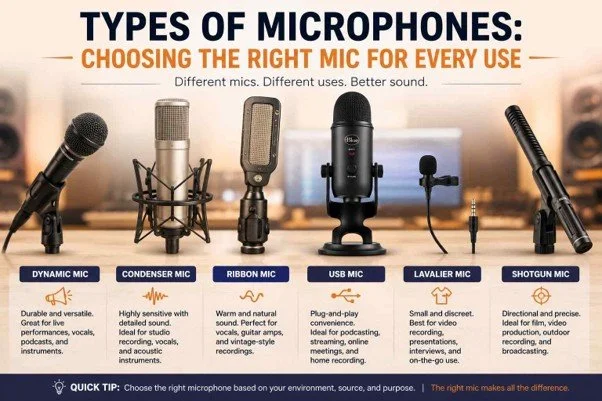
The right microphone can make your recording sound clear, strong, and professional. But with so many different types of microphones, choosing one can be hard. Should you use a dynamic, condenser, ribbon, USB, or XLR microphone?
The answer depends on what you want to record and where you will record it. This guide explains how to choose the right microphone for singing, music, podcasts, voice-overs, and home recording. It will also help you find the right mic for your needs.
Why Choosing the Right Microphone Matters?
A microphone is the first tool in your recording setup. It captures your voice or instrument and turns the sound into an audio signal. If you use the wrong microphone, your recording may sound noisy, dull, or unclear.
For an independent home studio producer, choosing the right microphone is very important. Home studios may not have the same sound treatment as large professional studios. A good microphone can help capture a cleaner sound.
Before buying a microphone, think about:
What you want to record
Where you will record
Your budget
Your other recording equipment
The type of sound you want
The best microphone for recording a soft vocal may not be the best one for a loud guitar amplifier. The right choice depends on your needs.
Understanding the Main Types of Microphones
There are three main types of microphones: dynamic, condenser, and ribbon.
Dynamic microphones are strong and work well with loud sounds. Condenser microphones are sensitive and capture lots of detail. Ribbon microphones are known for their smooth and warm sound.
Learning about these microphone types is an important part of knowing how to select a recording microphone.
You should also think about how the microphone connects to your equipment. USB microphones connect straight to a computer. XLR microphones usually need an audio interface.
-
The three main types are dynamic, condenser, and ribbon microphones. Dynamic mics are good for loud sounds and live use. Condenser mics are great for detailed studio recordings. Ribbon mics give a smooth and warm sound.
-
A condenser microphone is often a good choice for studio vocals because it captures many details. A dynamic microphone can also work well, especially in rooms with unwanted noise.
Dynamic Microphones: Best for Live Performances and Loud Sources
Dynamic microphones are strong and reliable. They can handle loud sounds, which makes them popular for live shows and music recording.
They are often used for:
Drums
Guitar amplifiers
Loud vocals
Percussion
Live performances
Dynamic microphones usually pick up less room sound than condenser microphones. This makes them useful in home studios that do not have perfect sound treatment.
If you want a simple microphone for loud sounds, a dynamic mic may be a good choice.
Condenser Microphones: Ideal for Studio Recording
Condenser microphones are very sensitive. They capture small details in a voice or instrument, which makes them popular in studios.
They are often used for:
Singing vocals
Acoustic guitar
Piano
Voice-overs
Podcasts
Studio instruments
For many singers, a condenser microphone can be the best microphone for singing vocals because it captures the natural details of the voice.
However, condenser microphones also pick up more room sound. If your room has echoes, traffic noise, or loud fans, you may need a quieter space.
-
A condenser microphone is more sensitive and captures more detail. A dynamic microphone is stronger and handles loud sounds well. Condenser mics are common in studios, while dynamic mics are popular for live shows and loud sources.
Ribbon Microphones: Warm and Natural Sound
Ribbon microphones are known for their warm and smooth sound. They can make bright or harsh sounds feel softer.
They can be used for:
Electric guitars
Brass instruments
Strings
Room sounds
Warm vocal recordings
Ribbon microphones are more delicate than dynamic microphones, so they need careful handling. They are often used by experienced producers and engineers who want a special sound.
USB vs XLR Microphones: Which One Should You Choose?
USB and XLR microphones are both useful, but they work in different ways. A USB microphone connects directly to your computer. It is easy to set up and is a good choice for beginners, podcasters, and simple home recording. An XLR microphone connects to an audio interface. It gives you more control and can be a better choice if you plan to build a larger home studio.
-
A USB microphone is a simple choice for beginners because it connects directly to a computer. If you plan to grow your studio, an XLR microphone may be a better long-term choice.
Understanding Microphone Polar Patterns
A polar pattern shows where a microphone picks up sound.
Cardioid: Picks up sound mainly from the front. It is useful for vocals, podcasts, and voice-overs.
Omnidirectional: Picks up sound from all directions. It can be useful when you want a natural room sound.
Figure-8: Picks up sound from the front and back but rejects much of the sound from the sides.
Supercardioid: Focuses mainly on the front and rejects more sound from the sides.
Knowing polar patterns can help you understand how to choose the right microphone for your room and recording needs.
How to Choose the Right Microphone for Your Needs?
Think about what you want to record before buying a microphone.
For singing, a condenser microphone is often a good choice for studio recording. For loud guitar amplifiers and drums, a dynamic microphone may work better.
For podcasts, a dynamic mic can be useful in a noisy room. A condenser mic may work well in a quiet room. This can help you find the best microphone for podcast recording.
For voice-overs, clear speech is very important. A condenser microphone can capture detailed speech in a quiet room, making it a good option for the best microphone for voice-over recording.
Always think about your room, sound source, budget, and equipment before you buy.
Common Mistakes to Avoid When Buying a Microphone
Do not buy a microphone just because it costs more. An expensive microphone may not be the best choice for your voice or room.
Avoid these common mistakes:
Choosing the wrong microphone type
Ignoring room noise
Forgetting to check connections
Buying without checking your audio interface
Choosing the wrong polar pattern
Expecting the microphone to fix poor recording skills
The best microphone is the one that suits your needs.
Professional Tips for Getting the Best Recording Quality
A good microphone works best when you use it correctly.Place the microphone at the right distance from your voice or instrument. Do not stand too close unless you want a stronger bass effect. Use a pop filter when recording vocals or speech. This helps reduce strong "P" and "B" sounds. Keep your recording space quiet. Turn off fans and other noisy devices when possible.
For artists using music production services, a producer or engineer can also help you get better results. They can guide you with microphone placement, recording, editing, mixing, and mastering.
-
Professional studios use many types of microphones. The choice depends on the singer, instrument, room, and sound the engineer wants. There is no single microphone that is perfect for every recording.
Final Thoughts
Choosing a microphone is easier when you know what you want to record. Dynamic mics are great for loud sounds, while condenser mics capture detailed vocals and speech. Ribbon mics offer a warm sound, and USB mics make home recording simple.
Think about your room, budget, and equipment before buying. If you need help with recording or music production services, we at Richard Schulte can help you make smart recording choices and bring your ideas to life. The right microphone is the first step toward a great recording.